Lead Follow-Up Automation Malaysia: Reply on WhatsApp Fast

Lead follow-up automation in Malaysia helps SMEs reply to every WhatsApp enquiry fast, qualify leads, send timely follow-ups and pass hot leads to sales.
It is 10:40 PM. A potential customer saw your Facebook ad, tapped the WhatsApp button and asked, "Hi, how much ah? Got promotion?" Your sales executive is asleep. By the time someone replies the next morning, the customer has already messaged two competitors, and one of them answered within minutes.
Nobody starts a business to watch good leads go cold in a chat list. Lead follow-up automation hands the first reply, the basic questions and the reminders to an AI agent, so your sales team spends its time on conversations that are ready to close.
What Is Lead Follow-Up Automation?
Every enquiry goes through the same small steps: someone notices the message, replies, asks a few questions, records the details, follows up if the lead goes quiet and finally passes it to the right salesperson. In many SMEs, every one of those steps depends on a person remembering to do it.
Lead follow-up automation means using software and AI agents to run the repetitive parts of that process for you:
- Instant first replies. Answering new enquiries on WhatsApp, web chat, email or social messages straight away, day or night.
- Answering common questions. Replying from approved information about your products, services, locations and opening hours.
- Qualifying leads. Asking the questions your sales team always asks, such as what the customer needs, when and where.
- Recording every lead. Logging the contact, source and answers in one shared list instead of scattered chats.
- Following up on time. Sending polite reminders when a lead goes quiet, on a schedule you agree.
- Handing over to sales. Passing ready-to-buy leads, and anything complex or sensitive, to a person with the full conversation attached.
The goal is not to remove your sales team from the conversation. It is to make sure no enquiry waits for hours, and that salespeople pick up leads that are already warm.
Why Leads Go Cold in Many Malaysian SMEs
Most SMEs work hard and spend money to get enquiries, then lose some of them quietly after the first message. The usual reasons are familiar:
- Enquiries arrive everywhere. WhatsApp, Facebook and Instagram messages, website forms, email and phone calls all land in different places.
- Replies depend on who is free. When the team is busy, on leave or off for the night, new messages sit unanswered.
- The same questions repeat. Price, availability, location and "can deliver or not?" get typed out again and again.
- Follow-ups rely on memory. A salesperson promises to "check and revert", then the reminder is lost in a busy week.
- Lead details are scattered. Information sits in personal phones and chat histories, so managers cannot see which leads are still open.
- Handover is messy. When a lead is passed between staff, the customer often has to repeat everything.
The result is wasted ad spend, uneven customer experience and a sales pipeline that is hard to measure.
What You Can Automate in Lead Follow-Up
Not every sales conversation should be automated, but much of the early work is a good fit.
First replies on WhatsApp and other channels
An AI agent can reply to new enquiries as soon as they arrive, greet the customer, answer simple questions and set expectations about what happens next. Our guide to automating WhatsApp customer service covers how 24/7 replies work in practice.
Qualifying questions
Instead of a long form, the agent asks a few short questions in the chat, such as what the customer is looking for, their budget range, preferred date or location. The answers are recorded so sales does not need to ask again.
Lead logging and tagging
Each lead can be logged automatically in a shared list or the tool your team already uses, with its source, status and answers. Managers can see new, open and closed leads in one place.
Scheduled follow-ups
When a lead goes quiet, the agent can send a friendly reminder after the interval you choose, share the information they asked for or offer a time to talk. Follow-ups stop once the customer replies, books or says they are not interested.
Booking and handover
Leads that are ready can be offered an appointment or call slot, as described in our guide to appointment booking automation. Hot or complex leads are handed to a salesperson with the full conversation.
How Lead Follow-Up Automation Works
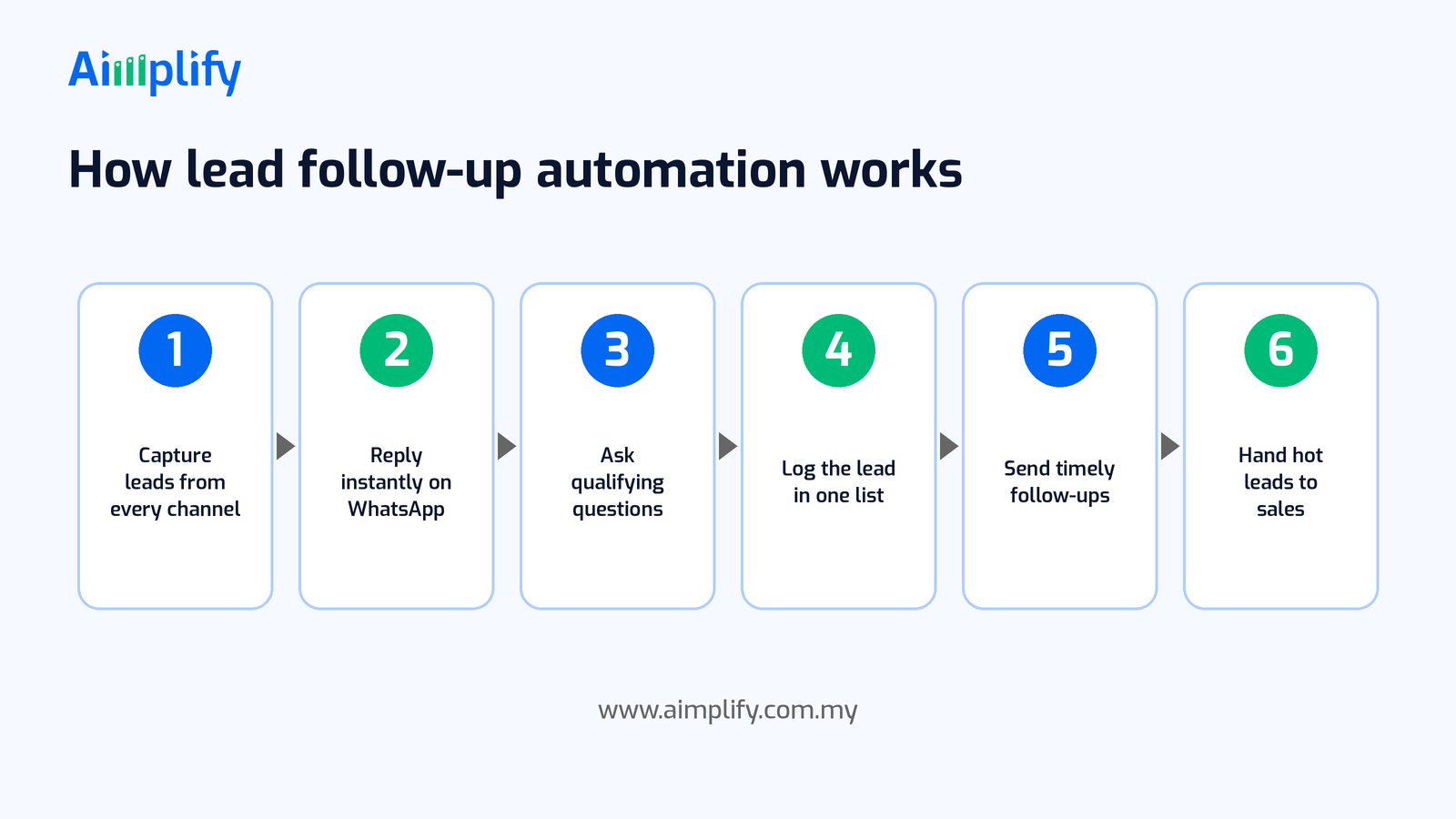
A typical setup follows six steps:
- Capture leads from every channel. Enquiries from WhatsApp, web chat, forms, email and social messages are brought into one flow.
- Reply instantly on WhatsApp. The agent sends a first reply within moments, using your tone and approved information.
- Ask qualifying questions. The agent asks the few questions your sales team needs to judge fit and urgency.
- Log the lead in one list. Contact details, source, answers and status are recorded in a shared list or system.
- Send timely follow-ups. Quiet leads get reminders on the schedule you set, and the sequence stops when they respond.
- Hand hot leads to sales. Ready-to-buy or complex leads go to the right person, with the conversation history attached.
Your team decides the rules: which questions to ask, how often to follow up, when to stop and when a person must take over.
Keep Follow-Ups Helpful, Not Spammy
Automation should make customers feel looked after, not chased. A few good habits help:
- Respect consent. Message people who contacted you or agreed to hear from you, and make it easy for them to opt out.
- Keep messages short and useful. Every follow-up should answer a question, share relevant information or offer a next step.
- Limit the number of reminders. Agree a sensible maximum and stop when the customer replies or declines.
- Follow WhatsApp's rules. Avoid bulk blasts and unsolicited messages that can get numbers restricted. Our guide on why WhatsApp numbers get banned explains the common causes.
- Protect personal data. Collect only what you need, limit who can see it and handle it in line with the Personal Data Protection Act 2010.
- Escalate quickly. Complaints, pricing exceptions and sensitive questions should go straight to a person.
A Lead Follow-Up Readiness Checklist
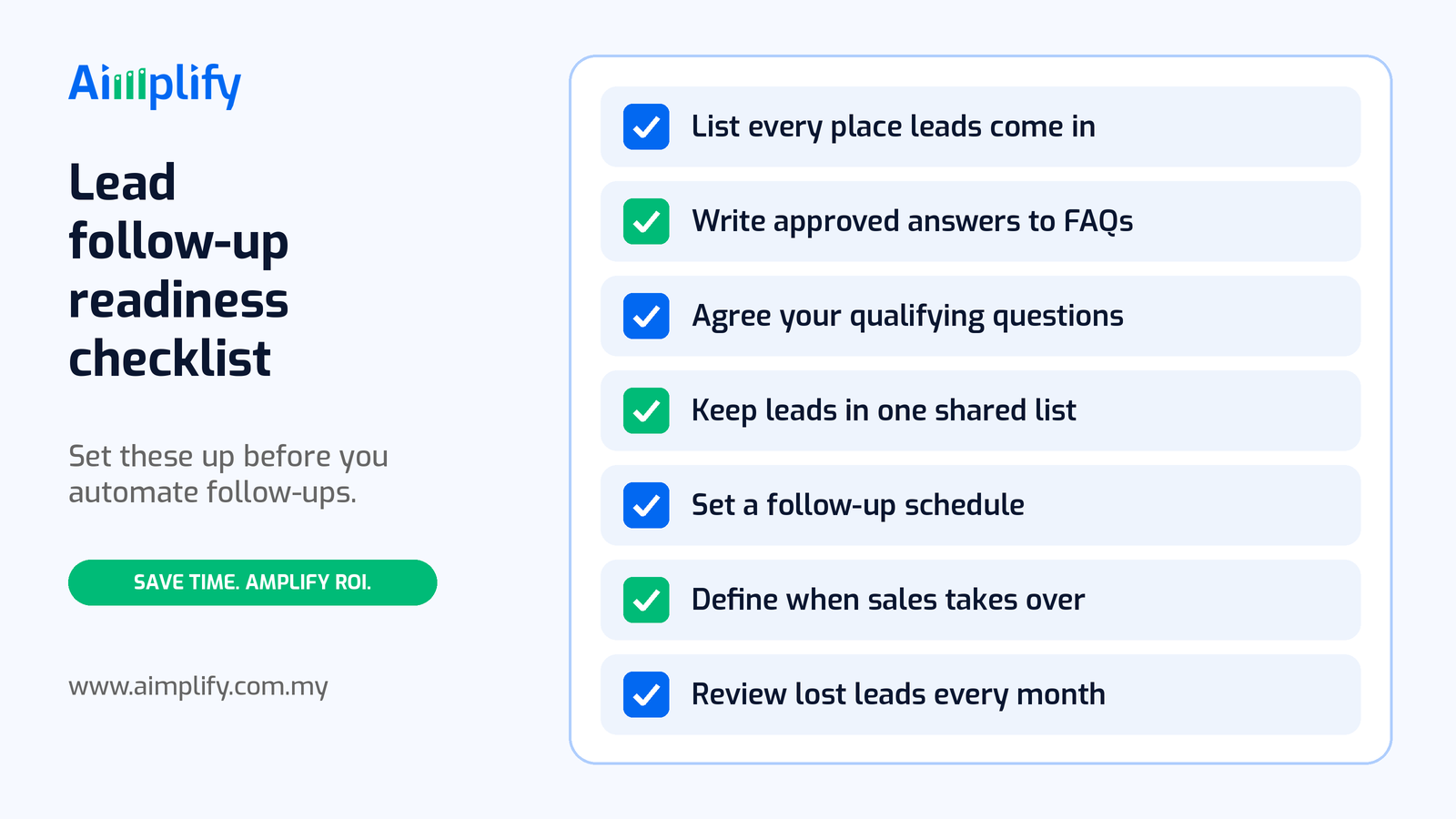
Before you automate lead follow-up, get these basics in place:
- List every place leads come in. WhatsApp numbers, social pages, website forms, email and walk-ins.
- Write approved answers to common questions. Products, services, locations, hours and what you can and cannot promise.
- Agree your qualifying questions. Keep them short, and only ask what sales really uses.
- Keep leads in one shared list. Choose one place where every lead and its status is recorded.
- Set a follow-up schedule. Decide when reminders go out, how many and what each one says.
- Define when sales takes over. Agree what makes a lead "hot" and who receives it, with a backup.
- Review lost leads every month. Look at where leads dropped off, then improve answers, questions and timing.
A good first step is to automate first replies and lead logging, then add follow-up sequences and booking once the team trusts the flow.
Where Aimplify Customer Service Fits
Aimplify CS is Aimplify's AI customer service agent for Malaysian SMEs. It handles 24/7 conversations on WhatsApp and the web, resolving queries, answering FAQs and handling bookings, across channels such as WhatsApp, email, live chat and social, with smart escalation to your team.
For lead follow-up, that means the agent can reply to new enquiries at any hour, ask your qualifying questions, log each lead, send follow-ups on your schedule and pass ready leads to sales with the full conversation. Your team stays in control of the rules, the offers and the closing.
Aimplify connects to your existing tools, such as WhatsApp, email, Google Sheets and cloud drives, rather than replacing them, and data cleaning and integration are included. Your answers, questions and follow-up rules are set up with your team during implementation. Most teams follow our 28-day go-live plan: find the bottleneck, clean and connect, then put the AI workforce live.
Ready to hire your AI workforce? Book a live demo or talk to an AI Architect about the leads your team is missing today.
Frequently Asked Questions
What is lead follow-up automation?
Lead follow-up automation is using software and AI agents to reply to new enquiries, ask qualifying questions, record leads, send scheduled follow-ups and hand ready leads to sales. Your team still sets the rules and closes the deals.
Can an AI agent reply to leads on WhatsApp after office hours?
Yes. An AI customer service agent can reply to WhatsApp enquiries 24/7 using approved information, then pass leads that need a person to your team during working hours or straight away if urgent.
Will automated follow-ups annoy my customers?
Not if they are designed well. Keep messages short and useful, limit the number of reminders, stop when the customer replies or declines, and only message people who contacted you or agreed to hear from you.
Do I need a new CRM to automate lead follow-up?
Not necessarily. Aimplify is designed to work with the tools you already use, such as WhatsApp, email and Google Sheets, so leads can be logged where your team already works.
Is lead data safe with an AI agent?
Lead data includes personal information, so collect only what you need, limit access to the people and systems that require it and handle it in line with the Personal Data Protection Act 2010. Your team decides what the agent can see and do.
Related Articles
Payroll Automation Malaysia: Faster, Accurate Pay Runs
Payroll automation in Malaysia helps SMEs gather attendance, leave and claims, prepare EPF, SOCSO, EIS and PCB, and run accurate pay without spreadsheets.
AI WorkforceAppointment Booking Automation Malaysia: Book on WhatsApp
Appointment booking automation in Malaysia lets SMEs take bookings on WhatsApp 24/7, confirm slots, send reminders and handle changes without extra admin.
AI WorkforceExpense Claim Automation Malaysia: Faster Staff Claims
Expense claim automation in Malaysia helps SMEs capture staff receipts on WhatsApp, check each claim against policy, route approvals and reimburse on time.